Showing posts with label Kerala. Show all posts

Monday, December 31, 2012

Chembra Trek, Wayanad

The key to conquering any peak is not to look up for what is left, but to look back to see how much you have already covered.
The prospect of conquering any peak is always enticing enough to make me and my like-minded friends to put on our travel gear and head out to some place exciting. The Chembra Trek required no additional effort in appeasing the group to undertake this trek. A simple with a single picture did the trick and pulled-in the quorum for a trip. The single picture and the USP of the Chembra Trek was that of a natural heart-shaped lake half-way through the climb. This natural and perfectly heart-shaped lake with water throughout the year stimulated and intrigued many in the group. Although there were the last-minute drop-outs, we still managed to total six. This proved a good number to take our own car rather than depend on a rented one vis-a-vis cut costs for the trip.
 
If the heart-shaped lake is an asset of the Chembra Trek, then the guide who MUST accompany you along the trek is the liability. For every group that wants to climb Chembra, the forest department provides a Guide (whose fee is covered in the entry tickets). It is not like you need a guide to find your way around, but the forest officials insist that you must carry one with you. The ill-effects of carrying a guide in such a trek is that, the moment you tell him you want to climb all the way to the final peak and not go back after reaching the heart lake (as many do), he starts trying to de-motivate you about how arduous the trek is and blah blah blah. But then we are not the ones to be cowed down so easily. And despite a very slow mover in our group we succeeded in conquering Chembra Peak with reasonable ease. And this was the crowning glory of our last trip of 2012.
 
The trek begins with a stroll through a private tea garden until you reach a watch tower. From here starts the real deal. In the first 500mts my breathing got heavy. At the end of the 1stkilometer, my hands were on my hips. By the 2nd km I was dragging my feet. By the third I feel numb to all the pain, exhaustion and the heavy breathing. And in comes the heart-shaped lake like a breath of fresh air. Though I’ve seen the picture of this lake a hundred times, it was still unbelievably heart-shaped in real life. It takes me about half an hour to take the perfect picture of the lake without the tourists occupying the frame. And that’s good time to recover my strength and my breath. With that I set forth to conquer the peak. The distant elusive peak is an arduous climb, but not impossible.
 
After the disappointment in KP this time round my determination was strong. I had to finish this trek and would like to do it with considerable ease. My strategy was to not stop and rest but keep walking - no matter how tired my body was. When I couldn’t take it anymore I took short breaks of 3 minutes each. In those 3 minutes I practiced my Yoga techniques of taking deep breaths. Three short breaks of 3 minutes each and a half hour break at Chembra lake got me to the peak of Chembra. At 6900 feet I was standing at the highest point in Wayanad (or so the forest officials claim). It is obvious to any trekker or tourist that the peak that they claim to be the tallest here is definitely not true as there are more taller peaks adjacent to the one you are standing on. But why the forest officials claim that this is the tallest is beyond our imagination. Maybe it’s because there’s a threat of wild animals there, maybe they don’t want to entertain trekkers and tourists in these areas. But that doesn’t take away anything from the feeling of standing on a peak and breathing the fresh air of mother nature. Its not just air but pride that fills my chest when I take deep breaths at the peak.
 
On an average it takes 4 hours to reach the peak and 2 hrs to descend. A wonderful one-day trek with the everlasting image of the heart-shaped lake as a souvenir that will be etched in your mind.
 
Getting-there: Kalpetta->Meppady->Chembra Estate
 
Must-Do: Trek to the heart-shaped lake and beyond till you reach the peak.
Must-Don’t: Littering and camping overnight(not allowed)
 
My Rating: 8/10

Wednesday, December 26, 2012

Karapuzha Dam, Wayanad

Returning from Edakkal Caves we realised we were not left with much options for the remainder of the day. Meenmutty Falls was our original plan but conflicting reports of it being closed for tourists and the fact that we may miss the deadline for entry into the area made us fall back on Plan B. We zeroed-in on Karapuzha Dam as that was the closest to our accomodation in Meenangadi. Plus, we wanted enough time to relax before a demanding Day2 of our Wayanad trip.

Karapuzha Dam is built on the Karapuzha Lake, which is however a conglomerate of a dozen lakes. This place is not very touristy, but if you have an evening to kill and watch the sunset in Wayanad, then this is the place for it. This place also promises to be a good one for birding but I guess our timing wasn't right. The dam in itself is a very quiet place and unlike other dams across the country, this one is open to public and hardly has any security personnel around it.

After waking around the dam for a while and waiting for the sun to set, SM and I (who had driven the car last night taking turns) found a comfortable spot to lie down on. And before we knew it, we drifted into a deep sleep. And when I finally woke up i found, much to my dismay, the sun had set! But from what I heard from my co-travelers, the sunset was magical.


Getting: there: 17kms from Kalpetta and 6kms from Meenangadi.

Must-Do: Watch the sunset
Must-Don't: Littering

My Rating: 5/10

Eddakal Caves, Wayanad

Wayanad is one of the perfect weekend destinations from Bangalore. For one, it is a mere 300 kms from Bangalore and with good roads, it makes for an easy drive. For another, there are so many destinations in a 50 km radius around Kalpetta that you can plan multiple weekend getaways to this sleepy town nestled in the great wide Western Ghats. Not surprisingly, this is my second visit here. The first time round I covered Pookode Lake, Soochipura Falls and Kuruwa Dweep Islands. Needless to say, this time round I had other destinations in mind.
 
Unlike last time when we booked a TT, this time we opted to take our own car and that meant a lot of driving shared between 2 of the 6 passengers. Thankfully the well carpeted asphalt lasted all the way till Kerala border. But there ends the good fortune. The moment you step foot on God’s Own Country, it is as if you set foot on Hell! There are no potholes on this road – only craters! Once you cross Sulthan Bathery the craters disappear, only to give you a feeling as if you just landed on Mars. The so-called highway is being re-carpeted and from the looks of it the work has been going on forever. There are no visible signs of any work being done. After gobbling on some Masala Dosas and Puris from Sulthan Battery we headed towards Meenangadi, where we had booked ourselves into RI Residency. To our dismay we found the road to be blocked and traffic not allowed to pass through. Upon enquiry we found that there has been a tiger-spotting here a while ago and the forest officials were trying to capture or drive-away the tiger from the (so-called) human habitation. Apparently the tiger also killed 2 goats and a cow the night before which has the local population angered. And Kerala being Kerala which calls for a hartal at the drop of a hat has started agitation for the capture of the wild beast.

That meant we had to take a detour back to Sulthan Battery and follow a different route to Meenangadi. This detour cost us at least an hour. We checked into our dormitory accommodation at the spanking new RI Residency which to our surprise was very neat and comfortable. And at Rs 150 per head we could not be any happier! A quick bath later we headed to Edakkal Caves.

For the uninitiated, the Edakkal Caves are famous for its prehistoric carvings. Some of these carvings date back to 5000 BC which is attributed to the Neolithic man. These Stone Age carvings are the only one of its kind in South India and points to existence of a pre-historic civilization. Not all carvings are believed to be from the same era. That implies that people from different times have inhabited these caves and left their mark. The oldest of the carvings are believed to be 8000 years old. The existence of Tamil script only adds to the intrigue of the place and the history of this Dravidian language.

Until a few years ago going by the blogs of that time, getting to the caves used to be an arduous trek. All that has changed now with the so-called tourism development. Crass commercialization, well-paved roads, steel staircases, different entry and exit routes has changed the experience for the worst! The hordes and hordes of picnic goers don’t make the situation any better. Coming to the carvings themselves, thankfully they are well-maintained. The guard on duty and the ASI officer ensure that these engravings aren’t vandalized. For a small fee they even explain the history of the place including deciphering some of the markings on display. With that dose of pre-historic life we decided to head to our next destination.

Getting-there: About 25kms from Kalpetta and 13kms from Meenangadi.

Must-Do: Gobble delicious Pineapples on your way back to recharge yourself.
Must-Don't: Vandalism and Littering.

My Rating: 5/10

Thursday, October 04, 2012

Kalil Temple, Methala, Perumbavoor, Kerala

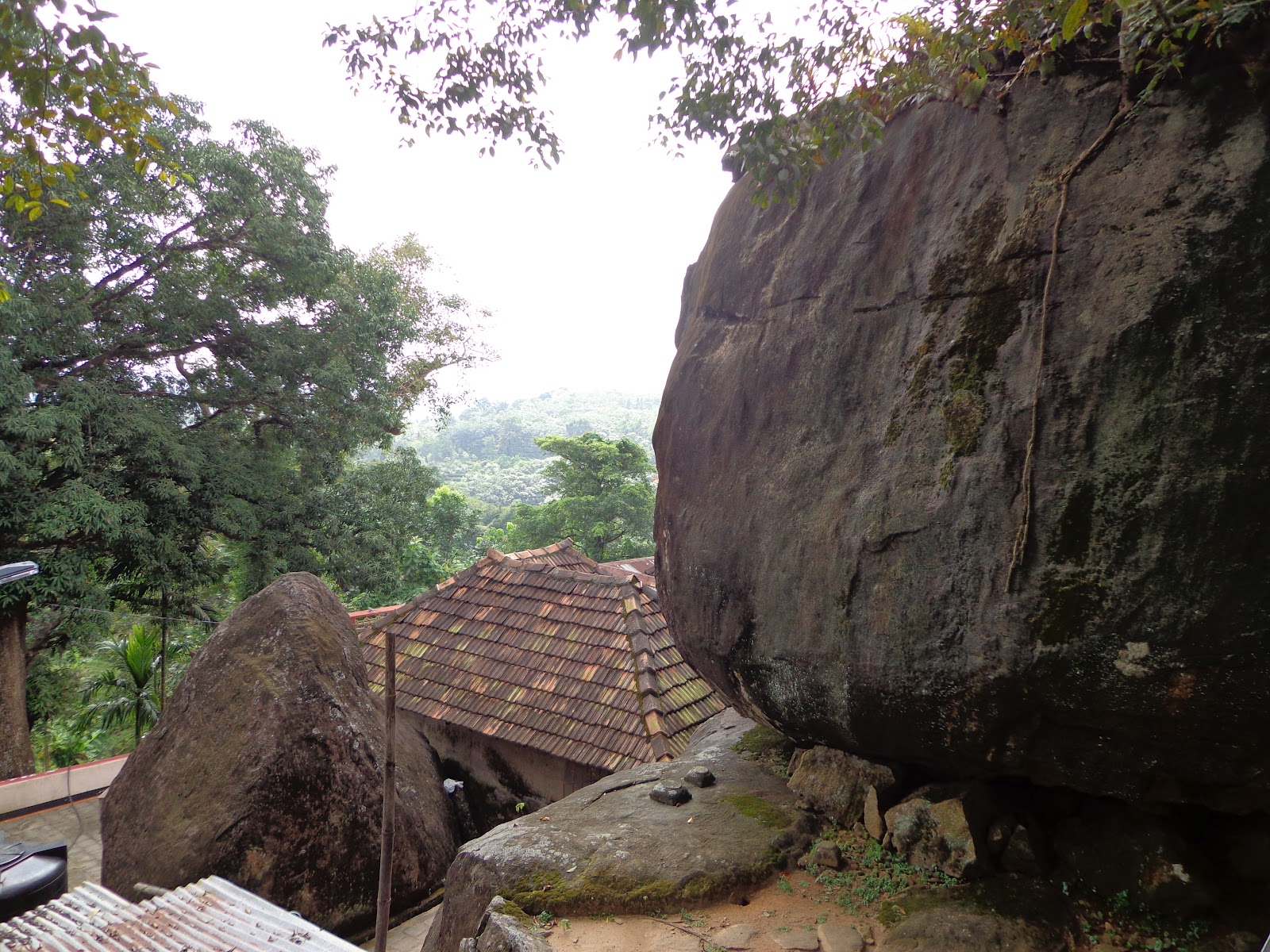
Kalil Temple was originally a 9th Century Jain Temple situated in Methala near Perumbavoor. The temple sits on a hill under a huge rock. A rocky terrain and a final flight of about fifty steps brings you to this mysterious temple. I say mysterious because, surprisingly only one portion of the huge rock touches the ground and there is no support whatsoever. Although on the other side of the suspending rock are the temple walls, it has to be noted that the walls were a later addition. Hence the mystery of the suspending rock lingers, which draws devotees to this cave temple. On top of the cave temple is a carving on the rock. There is some confusion over who that image belongs to. Some claim it to be Brahma while others claim it to be Mahaveer Jain.

The erstwhile Jain place of worship is now a Hindu temple with Bhagavathy Devi sitting pretty as the main deity here, which brings us to the second mystery of the temple. It is clearly obvious to any devotee that the idol of Bhagvathy Devi does not sit in the centre of the Sanctum Santorum (in the doorway) but visibly to the right. Meaning, to see the idol the devotees have to go the left of the doorway. Apparently this was not the case many years ago. The popular belief is that the idol is moving on its own without any human intervention. There is a third mystery attributed to this temple. Apparently a few years ago, on one of the rocks there, people have started observing the markings of what looks like Lord Shiva. And as the years pass by the carving is becoming more and more visible. Nobody knows how the markings are becoming more distinct and legible. Currently the face and upper body can be clearly ascertained.

Up until recently the temple would close by noon after the poojas and not open in the evenings (a rare occurrence in temples of kerala). This can be attributed to the belief of existence of evil spirits in the dense forest there. But since a year ago, the temple is thrown open in the evenings and poojas performed. All the mysteries attributed to the temple gives a special aura to the temple.


Getting-there: About 10 kms from Perumbavoor town in Aluva en route Muvatupuzha.

Must-Do: Check out the suspending rock, displaced Bhagvathy idol and the self appearing rock carving.
Must-Don’t: Clicking pictures inside the temple.

My Rating: 8/10

Thrikkariyoor Mahadeva Kshetram, Kothamangalam, Kerala.


Shiva Temple
 The Thrikkariyoor Shiva Temple is considered to be the last pratishta of Lord Parasurama. It is the last among the 108 Shivalayas consecrated by Parasurama. Legend goes that, Lord Parasurama (sixth incarnation of Lord Vishnu) created the land between Gokarna and Kanyakumari. After many years of penance Parasurama invoked Lord Varuna (Lord of the Oceans) to absolve Himself of His sins. Parasurama wanted to donate some land to the Brahmins and asked for this boon from Lord Varuna. Varuna gave Parasurama an axe and asked him to throw it as far as possible. The distance the axe covers from Gokarna will be given to him. The axe thrown from Gokarna landed in Kanyakumari, thereby creating the land (Kerala) for Brahmins. After this, Parasurama set about establishing 64 villages and consequently 108 Shiva temples in that stretch. Apparently Thrikkariyoor is where Parasurama attained Salvation.

It is also believed that this temple contains the spirits of Lord Shiva and Lord Krishna. But there isn't much info behind the reason for this belief. Another significance of Thrikkariyoor is that it is believed to be Capital of the Chera Dynasty. Some historians even claim that Thrikkariyoor is the modern Karur, although there is not much support for this theory.

Bhagvathy Temple

It is a comparatively large temple with medieval architecture. There is a calmness about the temple that will put your mind at peace - something that I look for in temples. The quietness and solitude of this holy place makes you feel a lot closer to God. Being walking distance from my maternal ancestral home, I've been here umpteen times. And every time I was here I just love the atmosphere and the cosmic energy projected at me. Refreshed and invigorated I head to the Bhagvathy temple bang opposite the Shiva Temple before returning home to relax for the rest of the day.

Getting-there: Thrikkariyoor is 4 kms from Kothamangalam town in Aluva (Ernakulam District, Kerala).

Must-Do: Obey the dress code.
Must-Don't: Miss a visit to Bhagvathy Temple opposite to the Shiva temple.

My Rating: 6/10

Information Courtesy: vaikhari

Punnathur Kotta, Guruvayoor


Aana (foreground) with the Kotta (background)
The name Punnathur Kotta (Palace) evokes images of a stately palace steeped in distinct Kerala architecture with its open courtyards, sloping red tile roofs and ornate wooden carvings. It also evokes images of the royal scions of the Verma lineage inhabiting the Palace. But here's the shocker. The Kotta is more known for the happenings outside the Palace than inside. Its inhabitants all stay outside of the Palace in the open - all 63 of them. The only beings that command respect and love of the people of Kerala after the Royal Vermas are the Elephants of the state. And it is them that have made the Punnathur Kotta their home. These elephants belong to Guruvayoor Sri Krishna Temple. They have been donated by different devotees to the temple for its various festivities.


I cannot be more cuter than this
There are elephants of all sizes, shapes and ages here. The younger ones are trained to become future temple elephants. Luckily for them, these elephants are very well taken care of. They are given an elaborate bath, lots of greens to chew on and in most cases enough shade to stand in. And then there are the elephants in heat, which are kind of quarantined from the rest with a Warning signboard cautioning the visitors from getting close to these mammals.

The Punnathur Kotta (now known as Aana Kotta) is a 30 acre Elephant Park in an erstwhile Palace of a local Ruler. It’s a nice way to relax in the hot Kerala sun after a visit to Guruvayoor Sri Krishna Temple and the Mammiyoor Temple. Children will especially love this place as they get to see so many live Jumbos up close and personal. And if you are lucky, you might even get to see the little kutti-aanas too. We weren't.

Getting-there: About 2 kms from Sri Krishna Temple and 1km from Mammiyoor Temple. For about Rs.130 an autowallah will be willing to cover this circuit, including an acceptable waiting period.
Ah... What a Life!

Must-Do: Try to get a glimpse of the cub elephants.

Must-Don't: Getting too adventurous and venturing close to the elephants (especially the ones in heat)


My Rating: 5/10

Mammiyoor Mahadeva Kshetra, Guruvayoor

The Sri Krishna Temple at Guruvayoor and Mammiyoor Mahadeva Kshetra are quite literally joined at the hip. One does not exist without the other. No wonder is a pilgrimage to Guruvayoor Sri Krishna Temple deemed incomplete without a visit to the Mammiyoor Shiva Temple.


Legend has it that Sri Krishna who's idol adorned the temple in Dwaraka, handed it over to Udhava to have it installed in a sacred location with the help of Guru and Vayu (hence the name Guruvayoor). Consequently, the sacred place which was identified was already occupied by Lord Shiva. Lord Shiva who heard of the noble deed from Guru and Vayu decided to vacate his seat of penance. He subsequently moved to the present day Mammiyoor Temple, while Lord Krishna occupied the seat at (the present day) Guruvayoor Sri Krishna Temple. Another unique feature of this temple is that, it is probably the only temple which bestows equal status to both Lord Shiva and Lord Vishnu. Besides Shiva and Vishnu, the temple also houses Ganesha, Murugan, Ayyapan, Bhagavathi and Nagaraja.
Devotees must strictly adhere to the dress code here: Mundu and bare-chest for men and sarees or pavadas for women. Even though Guruvayoor temple has done-away with this rigid rule, Mammiyoor hasn't. In case you find yourself at Mammiyoor wearing pants, just remember to rent a mundu from the Chappal Stand. They let it out for a paltry Rs 25 for a single use. Women can also opt for this option.
Getting-there: The Kshetram is a mere one kilometer from the Guruvayoor temple and there are plenty of autos plying in that route, in case you do not want to walk in the hot sun.

Must-Do: Obey the dress code. In case you couldn't, enquire at the Chappal Stand for Mundus-on-rent.
Must-Don't: Clicking pictures inside the temple.
My Rating: 7/10

Monday, November 21, 2011

Kuruva Dweep (Island), Wayanad

Continued from here and here.

Kuruva Dweep is a group of islands formed by River Kabini. It is also the most visited place in Wayanad. Kuruva Dweep is a good recreational place. The boulder-infested river is a good place to wet your feet and splash water around. It can be a good picnic spot to spend a lazy afternoon. Be warned that in flow of water in certain parts can be intimidating. The huge boulders though can break the flow can still be dangerous if one falls on it.

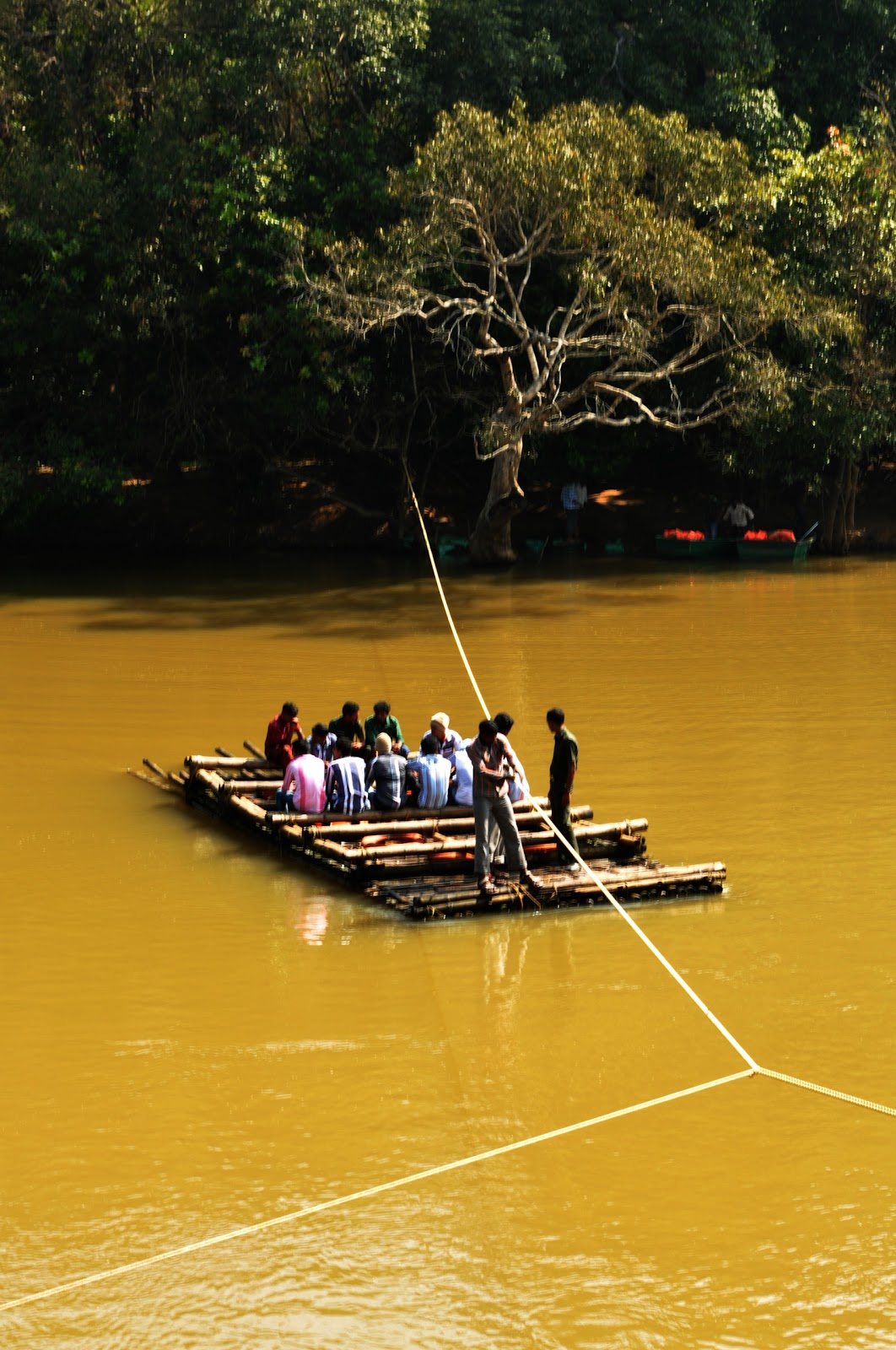
But getting to this place is not so easy. There’s quite a lot of walking to do and a handsome price to pay. Right where your vehicle is parked, there’s an entry fees to catch a raft that will take you to the other end of the river. Personally travelling in a raft has been my first experience. What I did not expect was a rope tied from one end of the river to the other. And the navigation of this raft was done with the help of this raft, by pulling them and even taking a 360 degree turn. After crossing the river one needs to walk half a kilometer before you will be asked to pay for another entry fee, plus additional charges for camera. I really don’t understand the idea behind paying entry fees twice. But that’s the way it is. Thankfully the place is not all that trashed, meaning that money goes in the upkeep of the place and also as wages to the many men and women posted in Army overalls.

It’s another couple of kilometers before you get a chance to wet your feet and play in the water. But once you get there, it’s all fun and games if you are coming as a group. Make sure you spare at least 2-3 hours for this location when you plan your trip.


Getting-there: 23kms north of Kalpetta.

Must-Do: Spare enough time to have fun. Exercise caution.
Must-Don’t: Littering.

My Rating: 5/10

Friday, November 18, 2011

Soochipara Falls, Wayanad


Soochipara (a.k.a Sentinel Rock Waterfalls) is a menacing-looking waterfall near Meppady in Wayanad. It stands at a height of 200 metres. Soochi means “needle” and para means “rock” in Malayalam, obviously referring to the needle-sharp rocks that abound the waterfalls. It is supposedly a three-tier fall, but with water gushing down in an intimidating fashion, it looks like a free fall.

The waterfall is a 2 km walk from where your vehicle can go no further. At the gate before the falls you need to pay for the entrance and camera. From here it is a downhill walk of about a kilometer and a half. Thankfully the path is well laid with stones providing an even surface to walk on. Once you touchdown on the falls, the rocks here are very slippery and sharp. Caution is advised while walking across these rocks. They are not only slippery but also razor sharp.

The spray of water falling down is enough to irrigate an agricultural field. And the thundering noise of the falls is enough to silence an explosion. It is this magical environment that I was expecting to find in Wayanad. Looking at the deluge of water gushing down, I could only but imagine the situation during July – August when the famous Kerala monsoon is at its peak. That will be a spectacle to be witnessed at a later date. Having lived a long-cherished dream, I was hoping that this would be the turning point of the trip after a rather disappointing start.


Must-Do: Try Indian Gooseberry (Amla) dipped in Honey, Pineapple dipped in salt and chilly water at the shacks near the waterfalls.
Must-Don't: Littering

My Rating: 7/10

Thursday, November 17, 2011

Pookode Lake, Wayanad

Wayanad has been a much-awaited, much-delayed and much-cancelled trip, so much so that I completely stopped planning a getaway to these mystic terrains. The breakthrough from this impasse however happened with a trip being planned by my new friends in the travel circle. I had no hesitation in tagging along with a group of eight others. And much like all much-awaited and much-delayed Bollywood movies stretched over a period of time, this one too turned to be a dud…. well almost. The saving grace being a good company.
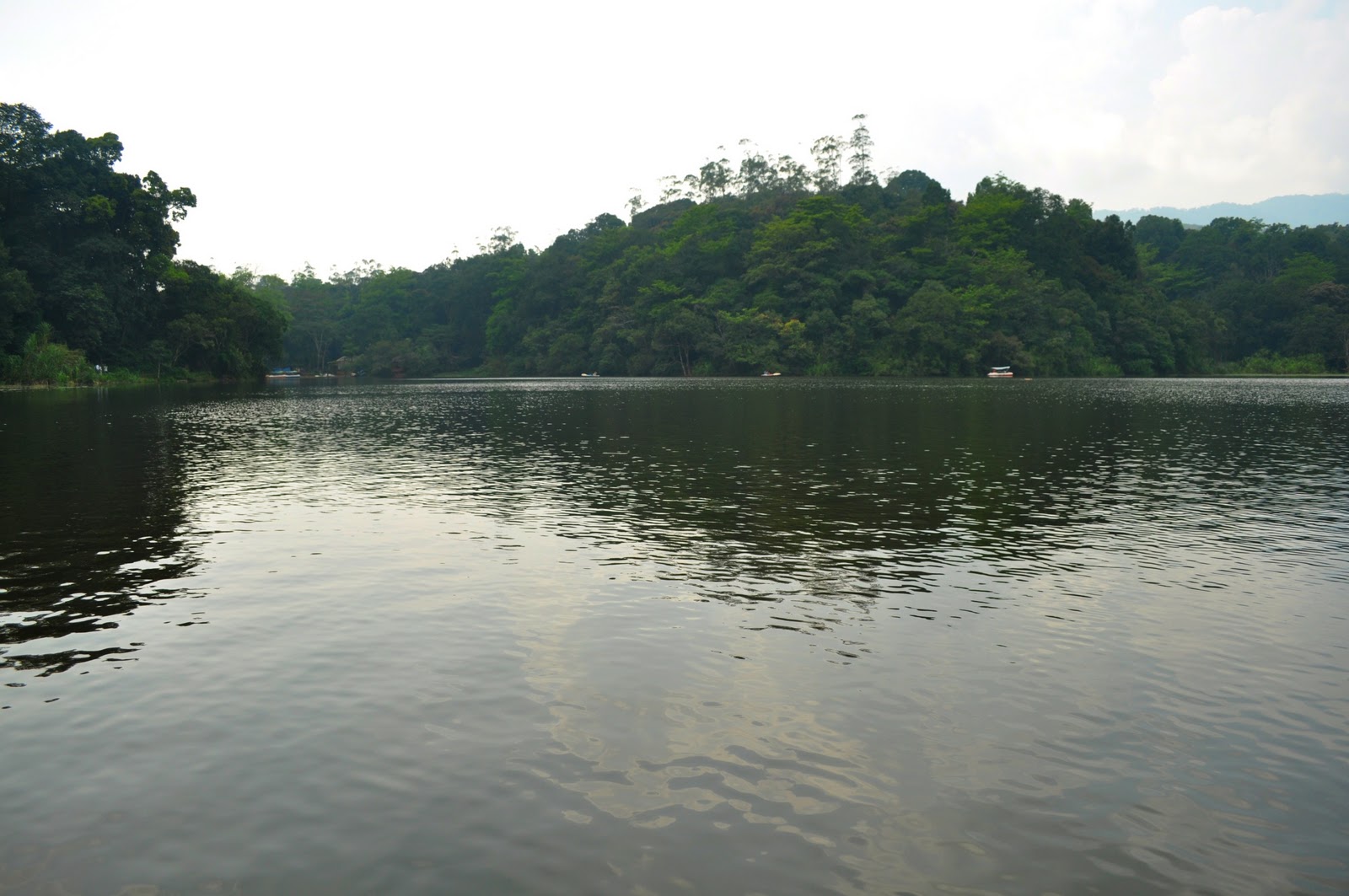
A long line of vehicles at the forest checkpost in the Karnataka-Kerala border, bad roads and delay in getting our rooms ready in Kalpetta meant we were already behind schedule. After breakfast, which can at best be called mediocre we headed to Pookode Lake. Having seen a few stunning pictures of Lake Pookode, I decided to include it in the itinerary. Had I read the Wikipedia article on Pookode Lake, I may have re-considered this decision. But it was not to be and Pookode Lake turned out to be as disappointing as the morning’s Masala Dosa. The hot November Noon Sun only worsened the experience. So Pookode is a small lake surrounded on all sides with hills and thick green cover. On another day and another time, the place has the potential to look scenic. But this was not the time or the day for that. Paddleboats are available for the visitors to drift across the lake. But a few minutes on these squeaky, outdated, holes-ridden boats and you would rather swim across – had the water looked a little appealing. The far end of the lake is home to quite a few water lilies, which the visitors are strictly not allowed to pluck!

The visitors can also walk along the path or just stay put – like I did. Pookode Lake is a “Plastic Ban Area” where you will find shops selling water bottles, cool drinks, chips and other packaged foods. Thankfully there’s also a botanical garden-shop selling plants with exotic-looking flowers and herbs. And ah… how can I forget the rather mild-mannered monkeys? The visitors have to pay for entrance tickets, camera charges and boat ride charges. So be prepared to spend at least Rs. 100 per head if you have a camera and intend to go for a boat ride.

This was not the start I wished for, from the “exotic” Wayanad. Things get only get better or worse. Which one will it be?

Getting-there: Pookode Lake is about 3kms from Vythiri.

Must-Do: Kalpetta (district headquarters) is the ideal place to stay in Wayanad since all places are at a convenient distance from here. Avoid this place if you are running on a tight schedule.
Must-Don't: Pollute and litter the lake and its sorroundings.
My Rating: 3/10

Wednesday, October 12, 2011

Chottanikkara Bhagavathy Temple, Ernakulam

Kerala is truly Gods Own Country, not only for its heavenly beaches or serene backwaters or misty mountains or magical monsoons but also for the existence of many renowned temples dotted across the state. One such temple of prominence is the Chottanikkara Bhagavathy Temple in Ernakulam District.


The Divine Mother known as Rajarajeshwari a.k.a Adiparasakthi a.k.a Chottanikkara Devi is worshipped in three forms – Saraswathy in the morning, Lakshmi at noon and Durga in the evening. The pedestal also includes the idol of Mahavishnu and hence the deity is called Ammenarayana, Devinarayana, Lakshminarayana, Bhadrenarayana. It is believed that if you visit this temple for 12 consecutive days, then you will get a lifetime of blessings.

The doors of the sanctum sanctorum open at 4 in the morning. It is believed that Sree Mookambika Saraswathy is also present in the temple in the morning. That is why the Mookambika Temple in Kollur opens after the Goddess Saraswathy returns to Kollur late in the morning.

To the east is a temple called Kizukkavu. The idol here is facing west. People suffering from mental illness visit this temple in a bid to cure the illness.

Getting-there: 22kms from Ernakulam.

My Rating: 5/10
Credits:
http://www.chottanikkarabhagavathy.org/home.html
http://en.wikipedia.org/wiki/Chottanikkara_Temple
http://www.chottanikkara.com/History.htm

Sri Krishna Temple, Guruvayoor

The Sri Krishna (or more fondly, Sree Guruvayoorappan) Temple in Guruvayoor is probably the most important temple to Malayalis in Kerala - perhaps more important than Sabrimala. But that’s not a debate I want to venture into. This temple has a lot of perceived and factual history attached to it – history that goes back to 5000 years.


According to folklore, Lord Krishna knew that after his time on earth, Dwaraka will be submerged under the sea. He however wanted his Vishnu idol to be worshipped by others. Hence he instructed Deva Guru and Vayu Deva to take his Vishnu idol to someplace safe and allow devotees to worship it, before Dwaraka is submerged. Deva Guru and Vayu Deva on their part found the ideal resting place for the Vishnu idol. Unfortunately, there was a Shiva idol already in that place. Deva Guru however prayed to Lord Shiva, who obliged to move his own idol to a different location – now known as Mammiyur, a kilometer away from this temple. The temple town thus got its name from Deva Guru and Vayu Deva.

But it has not been so smooth sailing for the temple. It was time and again plundered by different rulers and fire mishaps. In 1716 AD The Dutch had plundered and set fire to this shrine. In 1766 AD Haider Ali captured Calicut. But the temple was spared after a huge ransom was paid to the ruler. In 1789 his son Tipu Sultan set fire to the temple. But before he could do that the main idol was hidden underground and the procession idol shifted to Ambalapuzha. During the time of the British, the idols were reinstalled and the temple started to prosper. In 1970 a fire broke out in the temple, causing quite some damage.

The temple unfortunately is under the control of very Orthodox Brahmins. It was only in 1930 that untouchables were allowed into the temple. But non-Hindus, to this date are not allowed into the temple. The most glaring irony is that, despite the temple opening its doors with the melodious voice of KJ Yesudas’ devotional renderings, he has been denied entry into the temple on multiple occasions for being a Christian. It’s a sad state of affairs, this partisan treatment of devotees by the temple authorities.

This temple is also the most-sought-after location to get married. The number of weddings happening here in a day during peak seasons is mind-boggling. The crowds are so huge in numbers that there were occasions when grooms and brides were mistakenly exchanged.


Getting-there: Guruvayoor is about 30kms from Thrissur Railway Station. From Thrissur you can either go by road or rail.

Must-Do: There’s very strict dress codes for men and women. Men must wear mundus (white or saffron only). Pants and shorts not allowed. Men must be bare-chested. Women must wear saris, salwars and chudidhars only. Until recently only saris were allowed.
Must-Don’t: Consume Alcohol. Strictly no-alcohol area.

Caution: Maddening crowds during festivals and marriage seasons.
My Rating: 6/10
Credits:
http://www.guruvayoor.org/history.htm#co
http://wikitravel.org/en/Guruvayoor

Saturday, September 04, 2010

Aranmula Boat Race, Chengannur.

It feels like an eternity since I put on my travelling boots and when I eventually did, I realized I just struck-out one item from my places-to-be-before-I-die list. Kerala has always been close to my heart, not just for its beauty but also for it being my native land. So, it’s natural that everything about Kerala fascinates and excites me. But there are some things that excite any person irrespective of where you come from.

The annual boat races of Kerala is one such event that you would go any lengths to witness. So despite quite a few glitches, I was determined to experience it. And thankfully so, my determination paid of. A hurriedly arranged trip which involved getting stuck in Bangalore traffic for a good 2 hours before I ran on the wet and slippery platform of Yeshvantpur Railway station with two bags cumulatively weighing at least half my weight finally saw me witnessing the Aranmula Boat Race from the steps of Parthasaradhi Temple in Aranmula, Chengannur.

The Aranmula boat race is one among several annual boat races that live under the shadow of the more popular Nehru Boat Race. But unlike the tourist-oriented Nehru boat race, the Aranmula boat race is more a tradition than a competition and the oldest amongst the lot. The race coincides with the last day of Onam on which day the commemoration of the installation of the deity Lord Krishna is done. River Pamba on whose bank the temple resides is where all the action unfolds. The Chundan Vallam (Snake boat) is approximately 103 feet in length and have about 4 helmsman, 100 rowers and 25 singers.

The Vallamkali (boat race) have two categories. The first, where the Palliyodams (snake boats) from different villages of the surrounding areas compete against each other. The main singer leads the team with a vanjipaatu (boat song). The Oarsmen row the boat following the tune and rhythm of the singers. The first part of the competition is not a race, but rather a competition to decide the most synchronous and well sung team. After that comes the boat race to decide the fastest of them all.

Needless to say, it’s a real treat to the eyes watching these men in action. It’s unlike any sport in the world. It also happens to be the sport with the largest team size. The whole event takes about 3 hours to complete and at the end of it, you will be hungry for more. At the end of the race is the famous Valla Sadya (feast) to satiate your physical hunger. The whole charged-up atmosphere, the constant rhythmic vanjipaatu in the background, the lingering aroma of Valla Sadya and holiness of the temple makes it a trip that is truly unforgettable.

Getting-there: It’s a half hour bus ride from Changannur railway station. When in doubt, just follow the crowd.

Must-Do: Witness the boat race, take a boat ride and get a closer look at the Snake boats before the start of the race, eat the Valla Sadya, record a live vanjipaatu of a team.

Must-Don’t: Littering.

Other Attractions: Buy Aranmula Kannadi – metal mirrors. Aranmula Kottaram (palaces).

My Rating: 8.5/10

Thursday, May 20, 2010

Sree Padmanabhaswamy Kshetram, Thiruvananthapuram.

The Sree Padmanabhaswamy kshetram is one of the 108 Divya Desams (holiest abodes) of Lord Vishnu. Here Padmanabhaswamy in the form of Vishnu rests in the Ananthasayanam posture. Visiting the Kshetram had been a long standing dream and I only feel blessed to have got the opportunity. I woke up early in the morning with excitement matching a school kid who's ready to go on a school picnic. Pants, trousers and shorts are all forbidden inside the temple premises. So the excitement was two-fold having to wear the traditional mundu.

We decided to enter temple from the main entrance - the North Nada. Photography is strictly not allowed inside the temple so took a quick pic from the outside and stuffed the camera back into the car. Upon entering the temple we discovered that King of Travancore was in the temple premises, which meant local devotees will not be entertained inside the sanctum santorum of the temple. It's said that everyday the King of Travancore has a certain time to visit the temple. And during this period other devotees are not entertained. I was told that the King must visit Shri Padmanabhaswamy at the specified hour everyday. If he is late, the King will be fined. The King being fined is not particularly surprising considering the fact that the Kings of Travancore are called Padmanabha Dasas - meaning servants of Lord Padmanabha. It's also said that Travancore was always ruled by Lord Vishnu.

The kshetram is a sprawling one with long magnificiently carved corridors. However some restoration work is going on here, which may result in loss of the original architectural splendour of the Travancore scupltors.

After a few minutes of waiting for the King's departure, we were fortunate to see His Highness exit the temple and acknowledging his waiting subjects. After waiting in the queue for about half an hour we finally entered the sanctum santorum of the temple. The highlight of the temple is that the Ananthasayanam posture of Vishnu cannot be viewed from a single door. The view of the reclining Vishnu can be seen only through 3 doors. Through the first door one could see the face of Vishnu and the Shivalinga. The second door reveals Brahma seated on a Lotus emanating from the Lord's navel and finally Vishnu's feet through the third door.

Another interesting feature about this temple that came to light very recently was that the entire idol of Lord Vishnu except the head and chest is adorned with pure gold. All these years it was covered with Katu Sarkara Yogam to desist attention from the invading Muslim rulers. Yet another feature about this kshetram that attract devotees is its pal payasam, which by popular mandate is second only to the Ambalapuzha payasam. Again, legend has it one of the Kings of Travancore wanted to know why Padmanabhaswamy kshetram payasam was not as delicious or sweet as the Ambalapuzha payasam. He then summoned the entire cooking staff of Ambalapuzha to prepare the same payasam with all the same ingredients over here. But despite replicating the same ingredients and style of cooking, it was found that the new payasam was still not as good as Amabalapuzha. Finally it was concluded upon that it was the water that was used in the preparation that made all the difference. Apparently the water at the Ambalapuzha temple pond is sweeter than the one in Padmanaba Kshetram, which made all the difference.

Having fulfilled one more long cherished dream I returned home happy and devoted.

Getting-there: In the heart of Thiruvanathapuram (formerly Ananthapuri or Trivandrum)
Must-Do: Men must be bare-chested and wear mundus while women must wear saris or wrap-arounds.
Must-Dont: Photography.

My Rating: 6/10
Credits: Wikipedia.

Updated in July 2011: Based on a petition by a retired IPS officer, the Supreme Court ordered that the six secret vaults of the temple be opened for stock taking. What ensued has left the whole world in utter disbelief. The team after opening four of the six vaults (which have not been opened for the last 135 years) have found a treasure, which at first estimate, crosses Rs. 1 Lac Crores. This easily makes the Shree Padmanabha Kshetram the richest in the country.

There are two more vaults yet to be opened - A and B. There is however differences in opinion on the opening of Vault B. Some believe that opening this vault might be a bad omen for the people of Kerala, while other believe that the Vault B is actually a tunnel that leads to the sea, while some some others believe it is an esacape route for the Royal family to exit the city. It was found that the Vault B has a complex set of locks, which the team has not been able to open yet.

Ironically, the retired IPS officer who petitioned the court died of natural causes, within a fortnight of unsealing of the vaults. Is this what they call Divine Retribution?

Shanghumugham Beach, Thiruvananthapuram.

It's been close to 2 months since I did any kind of travel and a strange feeling was creeping inside me. So when the Kerala trip - though an official family trip - came up, I couldn't help but get excited. I knew with the kind of schedule we had for the 4 days, sightseeing was the lowest on the list of family-priorities. But I was determined to squeeze-out at least two destinations. The Shree Padmanabha Kshetram was definite go-ahead. After all who could say No to The Almighty Himself :-)

Luckily the second one worked too. We were basically looking to make it to one of the 3 main beaches in Thiruvananthapuram. We opted for Shanghumugham over Veli and Kovalam for no apparent reason. Shanghumugham is notorious for its menacing, fear-inducing tides. You get a feeling the Moon is three times closer to Shanghumugham than anywhere else in India.

Being in the heart of the city, its no surprise that Shanghumgham was a sea of humanity on a hot and humid Friday evening. Again its no surprise its a rather unkempt beach. Sunset was a no-show what with the cloud cover that seemed to have formed on an ad-hoc basis just to play spoilsport. But it definitely is a place to beat the heat and the humidity.

Getting-there: Bang in the heart of Thiruvananthapuram.

Must-Do: Visit the children's play park if you bringing kids along.
Must-Don't: Venture into the waters with or without kids, even if you are a seasonal swimmer. Littering.


My Rating: 4/10

Sunday, June 28, 2009

Jews Town, Cochin.

So? What do you do when you have time to kill and you are in city of Cochin? Quite obviously you would visit some of the neighbouring islands in Cochin, unless you are a Gold freak and want to check out the zillion gold shops in and around MG Road. After a little bit of deliberation we decided to visit Jews Town in Mattancherry Island and if time permits also check out Fort Kochi. We would have visited Bugatty Island, except that the only attraction there, the Bugatty Palace is now a star Hotel.

So, what's the best way to reach Mattancherry from Marine Drive? The ferry of course. I mean how often do you get to travel in a ferry? A Rs.3.50 paise ticket and you reach Mattancherry in about 20 mins - downstream. There are two main attractions in Mattacherry - the Mattancherry Palace and the Jews Synagogue, both of which are closed on Fridays and unfortunately for us it was indeed Friday. :(

Anyways, we decided to walk around Jews Town. Apart from the Synagogue there's a Jews Cemetery and a Jews Street. Jews street you'd find to be dotted with hundreds of antique shops. Out here you'd find anything and everything antique - right from meaningless photographs to even a Snakeboat. Its a shoppers paradise. A couple of khadi clothes shop you'd find with rock bottom prices. A little further down the street and you'll see the Jews Cemetery. Well, nothing much to look at (its a cemetery after all), just a little cultural significance. Jews street is the ideal place to spend a lazy afternoon.

Must-Do: Check out the bohemian stores and the antique dealers. Synagogue and the Mattanchery Palace.
Must-Don't: Visiting on a Friday.

My Rating: 5/10*

*Rating might go up had we visited the Synagogue and the Mattancherry Palace.

Bekal Fort, Kasargod.

Much has been heard about the Bekal Fort in Kasargod. One could even see Arvind Swamy desperately seeking Manisha Koirala in "Bombay" in this very locales. We decided to check out the place for ourselves even though we were in Kannur and Bekal was in Kasargod. But thankfully, Bekal is not that far from Kannur. It took us not more than 2 and a half hours to reach Bekal in a private bus, thanks to bus driver's Formula1 skills.

The ride to Kanhangad was pretty scenic with lots of streams/rivers all through our journey. After getting down at Kanhangad, we took another bus to Bekal, which was another 20 min ride from there. Once we reach Bekal, to our surprise we found it relatively less crowded like most places we visited in Kannur. At first look, it looks as if the fort stood the test of times. But once in, you'd realise that nothing much remains of the fort except the strong exterial fort walls. The best part about the fort is its Observation Tower. Atop this observation tower, the phrase "as far as the eye can see" is an understatement. Out here you could light years of land, sea and the sky.

The fort is so strategically located that its covered on three sides by water and one side by absolute greenery. There is an unusual quietness and serenity about this place that makes you not want to leave this place. The distant but loud sound of the unending waves soothes your mind and body unlike anything else in this world. You would never have enough of this place. The more time you spend here, the more you would want not to leave.

To our surprise, we found that large parts of the fort especially the walk-ways circumventing the walls of the fort has been reinforced over the years with lacerite. What is commendable about this reinforcement is that it does not spoil the aesthetics of the place.

The only disappointment about this fort is that, Bekal was never a palace. It was used only for defence purpose. Hence, you are deprived of few architectural splendors here. But apparently the fort was built in such a way to defend the fiercest enemies.

Once you have completed a tour of the fort, you can take one of the exits from the fort to the beach right below. The tide here is quite ferocious and even the season swimmer stands no match to the intimidating waters. The roaring waves here magically transforms you into an all together different world.

Bekal Fort has it all. Its the perfect holiday location. You never know how time flies here. So make sure you keep an entire day aside while visiting Bekal. And once you visit Bekal, you'll know why you promised yourself a second visit, like we did.

Getting-there: Any bus going towards Kanhangad.
Must-Do: Soak-In the sights, sounds, sand, surf and the sun of Bekal. Use the blended-in dumpsters.
Must-Don't: Be adventurous and think about a swim in the waters.
Could-Avoid: Taking pictures, as they will be etched in your minds till your last breath.

My Rating: 8/10

Saturday, June 27, 2009

Payyambalam Beach, Kannur


Situated about 4 kms from Kannur Railway station, Payyambalam beach is a local favourite. Every evening this beach is dotted with all kinds of people: kids playing under the watchful eyes of their parents, evening-walkers, day-dreaming strollers, relaxed local residents, soaking wet tourists, adventurous dumb-wits challenging the waves, et al.

Not many brownie points for this beach. Being in the heart of the city, its a "little" crowded, and waters muddy and salty as hell. But must watch the sunset here though. Nothing can go wrong with beaches and sunsets.


Getting-there: Auto rickshaw from anywhere in the city.
Pros: Right in the heart of the city. Good place to relax.
Cons: May be a bit crowded. Too many tall buildings facing the beach, spoils the aesthetics of the place.

My Rating: 5/10

Friday, June 26, 2009

Pazhassi Dam, Kannur


I should have taken my R&D on Pazhassi Dam a little more seriously. This place is strictly a picnic place. And a picnic is no fun with just two people, ain't it?
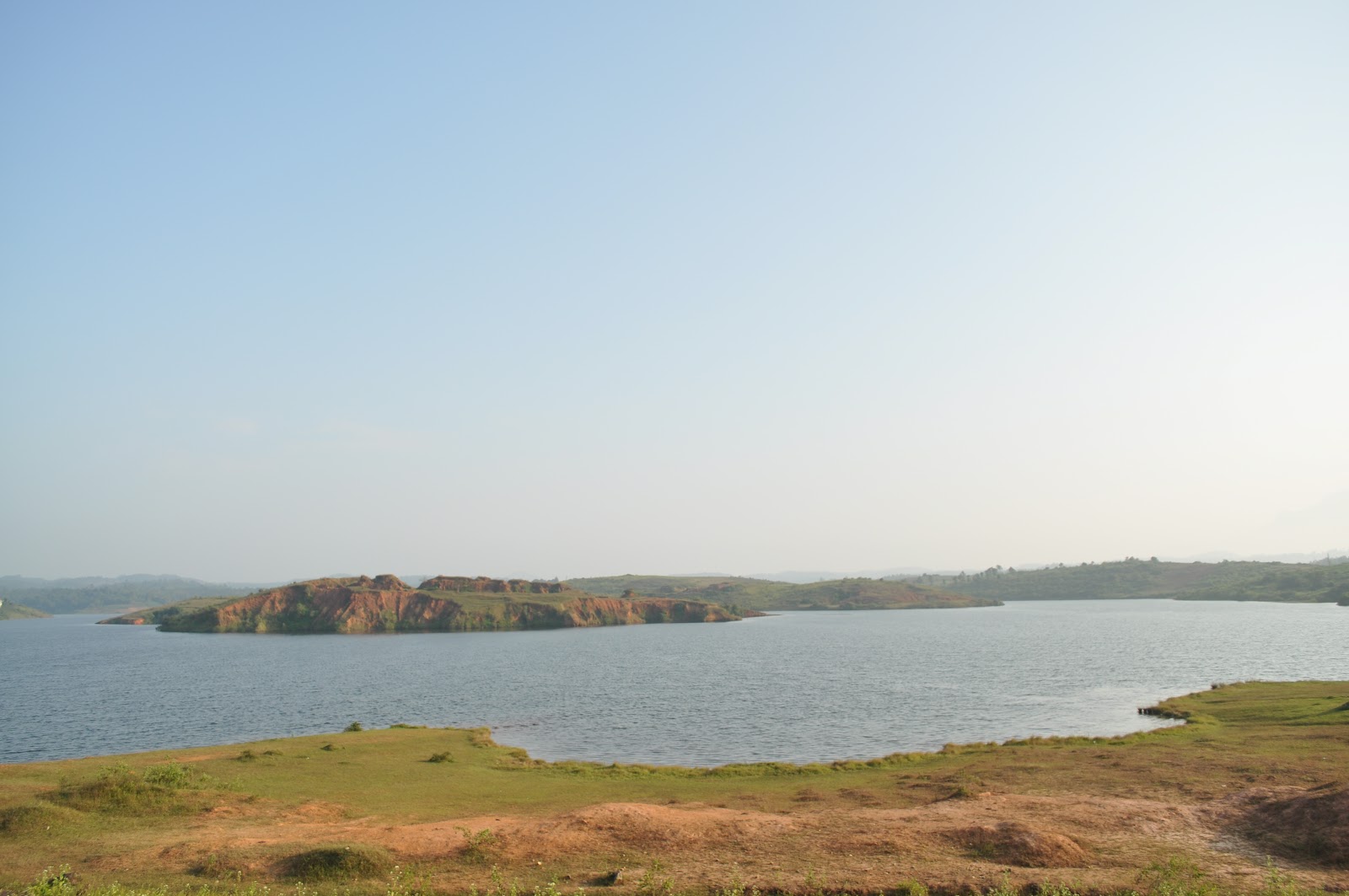
Well.. so there's this Pazhassi Dam over the Pazhassi River and threes a small park, some greenery, a curious stalker and that's about it.
But what makes the whole 37 kms travel from Kannur worthwhile is this one picture Ive taken of the greenery of this place. Its only when I got back to Bangalore and copied the picture onto my laptop did I truly see the beauty of the picture. Not surprisingly, it is now my desktop picture.

The up-side about this place is its Dead Silence. Nowhere in the whole wide world will you find a more calmer place. Its so quiet out here that you begin to wonder if you have gone deaf. From time to time, you need to make a make a sound to ensure that you are indeed not deaf.

On the down-side, you would have enough of the place after a while and wish to back to the more feel-good mad rush of the city.

But then, if you are in Kannur with enough time at your disposal you could stop by this place and experience what is called "deafening silence".

Getting-there: Take a bus from Kannur to Mattannur. And another one from there to the Dam(the frequency of which is one bus every 2 or 3 hrs).
Must-Do: Take Pictures.
Must-Don't: Visit here, if you are fighting against time and Littering of course.
Tips: Better to go in a group. Ideal place for Frisbees and cricket, find out the bus timings for the return journey.
Warning: The place doesnot have a proper washroom!!!
My Rating: 5/10

Muzhapilangad Beach, Kannur


Muzhapilangad beach situated 16 kms from Kannur is a must-visit for all beach enthusiasts. Muzhapilangad is no ordinary run-of-the-mill beach though. Its the only drive-in beach in kerala where you could actually drive a good 4 kms in the sand beach. The beach sand here is very hard which enables you to drive your vehicle at crazy speeds. So, if sand sculpting is your thing, you are at the wrong place. Add to that, the water here is so shallow, you could walk a quarter of mile into sea and come back without wetting your T-shirt.

The beach is frequented by:

  • Formula1 wannabes
  • L-boarders
  • Hand-holding couples
  • Health-freaks
  • Dejected souls
  • Camera-wielding Tourists

Like most tourist places in Kerala, this beach too is very well maintained. An Ice-cream vendor assured us, that every evening couple of KTDC workers pick-up trash from the beach. We decided to trust the guy after we failed to spot any trash around and handed-over our ice-creams covers to him reiterating him to pass it on to the workers.

Apparently, there are water-sports available here. But we couldn't spot any. May be because it was the off-season. The Europeans and the Americans come here in the winters. And for good reason too. A couple of days is all you need to get a complete tan.

All in all, a great place.

Getting-there: You could take any bus going from Kannur to Thalassery.
Must-Do: Collect Shells, drive a car along the water, walk into the sea, watch the sunset.
Must-Don't: Littering.
Caution: Stepping on crabs.

My Rating: 7/10